TMJ and sleep disorders
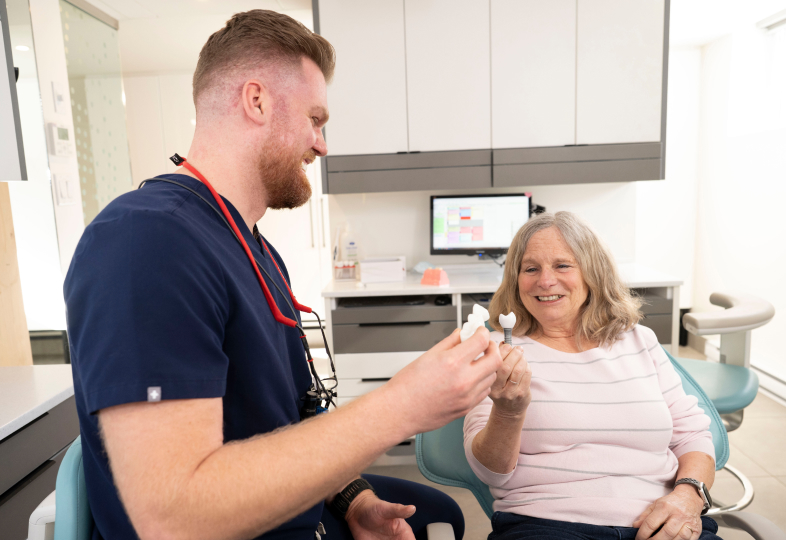
Jaw pain, persistent headaches, teeth grinding, and sleep disturbances can seriously affect your quality of life. Our dentists offer effective, personalized solutions for temporomandibular joint (TMJ) and sleep disorders, including occlusal splints, mandibular advancement devices, and therapeutic neuromodulator injections.
What is Temporomandibular Joint (TMJ) pain?
Understanding TMJ disorders
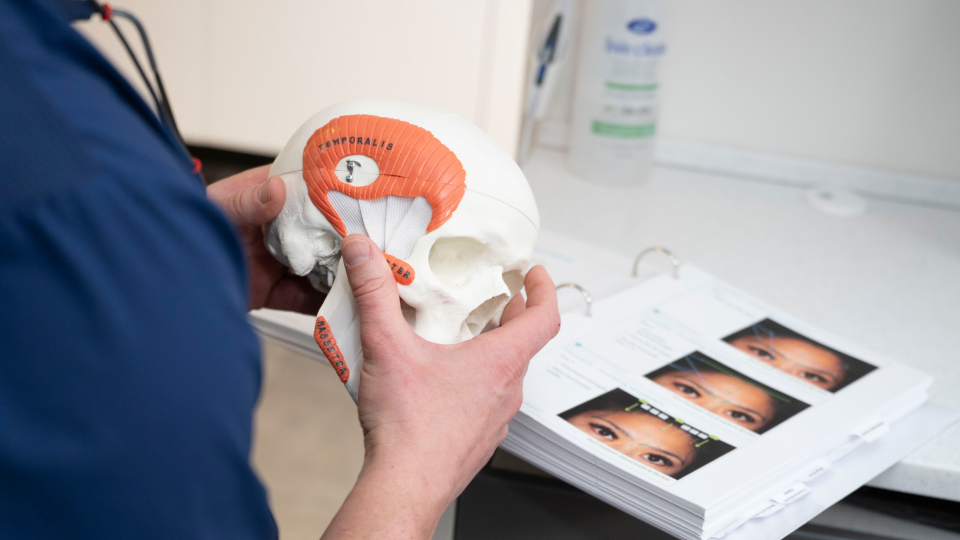
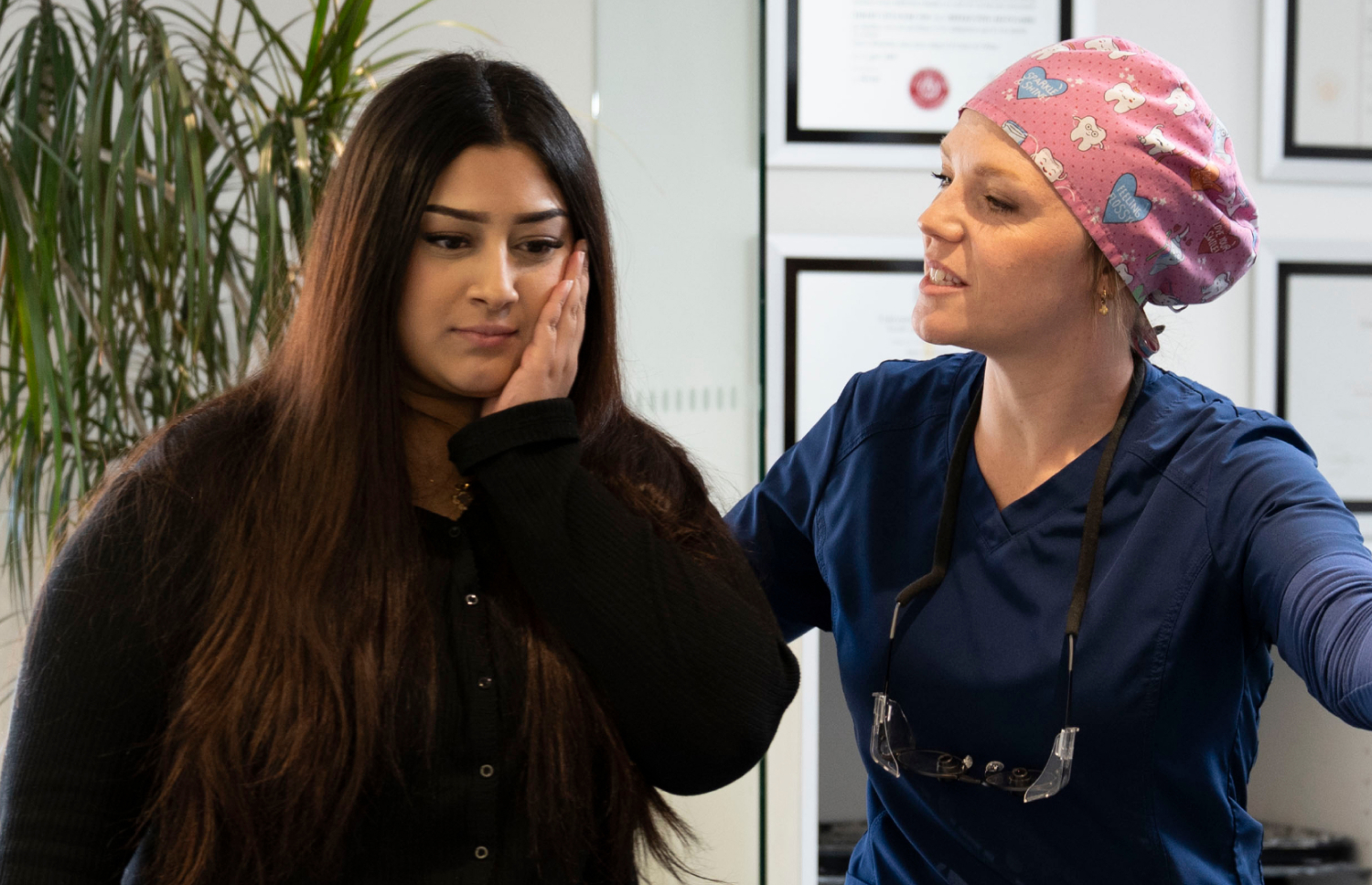
The temporomandibular joint (TMJ) connects your lower jaw to your skull and is located just in front of your ears. When this joint or the surrounding muscles do not function properly, you may experience:
- Jaw pain
- Clicking or popping when opening your mouth
- Frequent headaches
- Ear pain
- Difficulty chewing
- Tension in the neck and shoulders
- Jaw locking
These discomforts can be caused by stress, teeth grinding or clenching (bruxism), trauma, malocclusion (misaligned teeth), or even arthritis.
If you experience these symptoms, it is important to consult a dentist promptly to prevent the condition from worsening. Our dentists can help restore your daily comfort and improve your quality of life.
The temporomandibular joint (TMJ) connects your lower jaw to your skull and is located just in front of your ears. When this joint or the surrounding muscles do not function properly, you may experience:
- Jaw pain
- Clicking or popping when opening your mouth
- Frequent headaches
- Ear pain
- Difficulty chewing
- Tension in the neck and shoulders
- Jaw locking
These discomforts can be caused by stress, teeth grinding or clenching (bruxism), trauma, malocclusion (misaligned teeth), or even arthritis.
If you experience these symptoms, it is important to consult a dentist promptly to prevent the condition from worsening. Our dentists can help restore your daily comfort and improve your quality of life.
Occlusal splints (Nightguards)
Protect your teeth and relieve pain
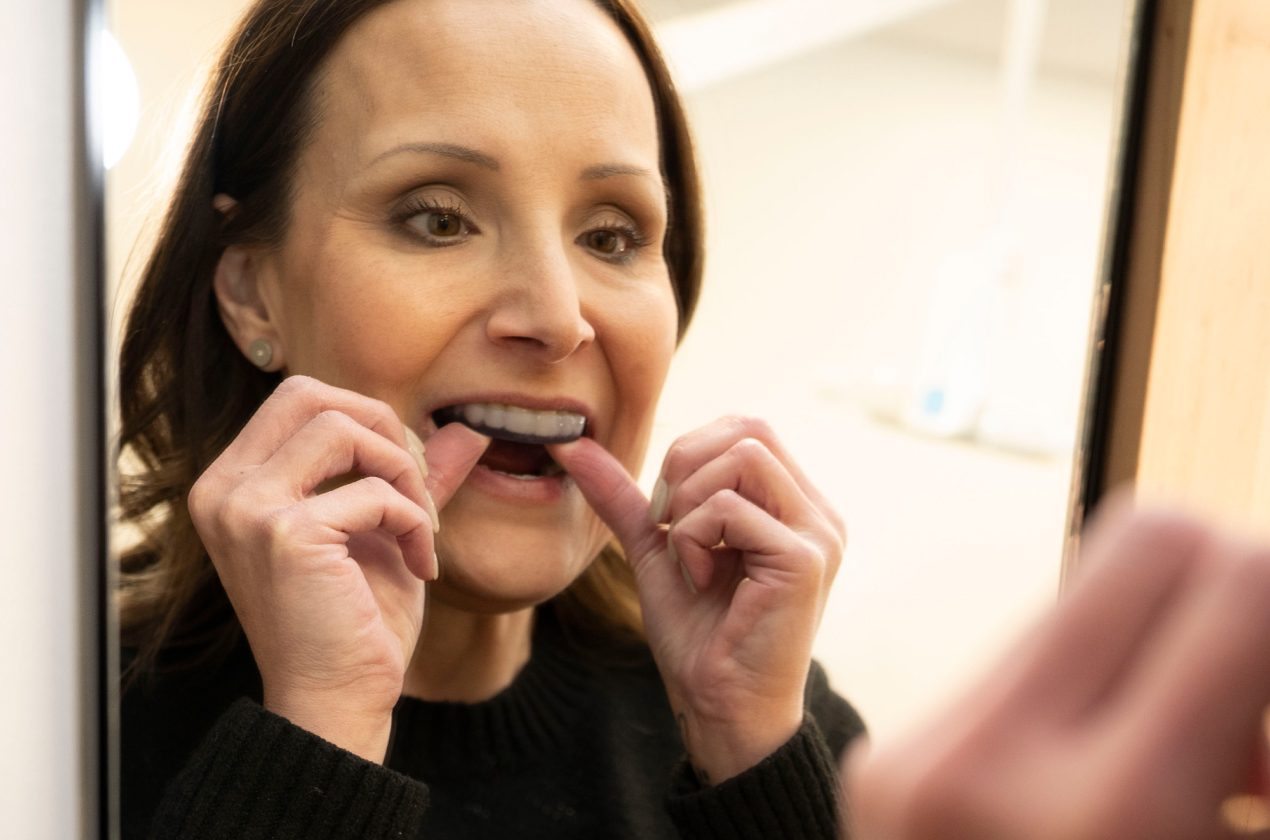
An occlusal splint is a comfortable, discreet dental device usually worn at night to reduce the effects of bruxism and TMJ disorders. Custom-made from an accurate impression of your mouth, it creates a protective barrier between your upper and lower teeth, preventing wear.
In addition to protecting your teeth, the occlusal splint positions your jaw properly, reduces muscle tension, relieves jaw and muscle pain, decreases headaches, and improves the quality of your sleep.
Learn more
An occlusal splint is a comfortable, discreet dental device usually worn at night to reduce the effects of bruxism and TMJ disorders. Custom-made from an accurate impression of your mouth, it creates a protective barrier between your upper and lower teeth, preventing wear.
In addition to protecting your teeth, the occlusal splint positions your jaw properly, reduces muscle tension, relieves jaw and muscle pain, decreases headaches, and improves the quality of your sleep.
Neuromodulator injections
Botox® for therapeutic purposes
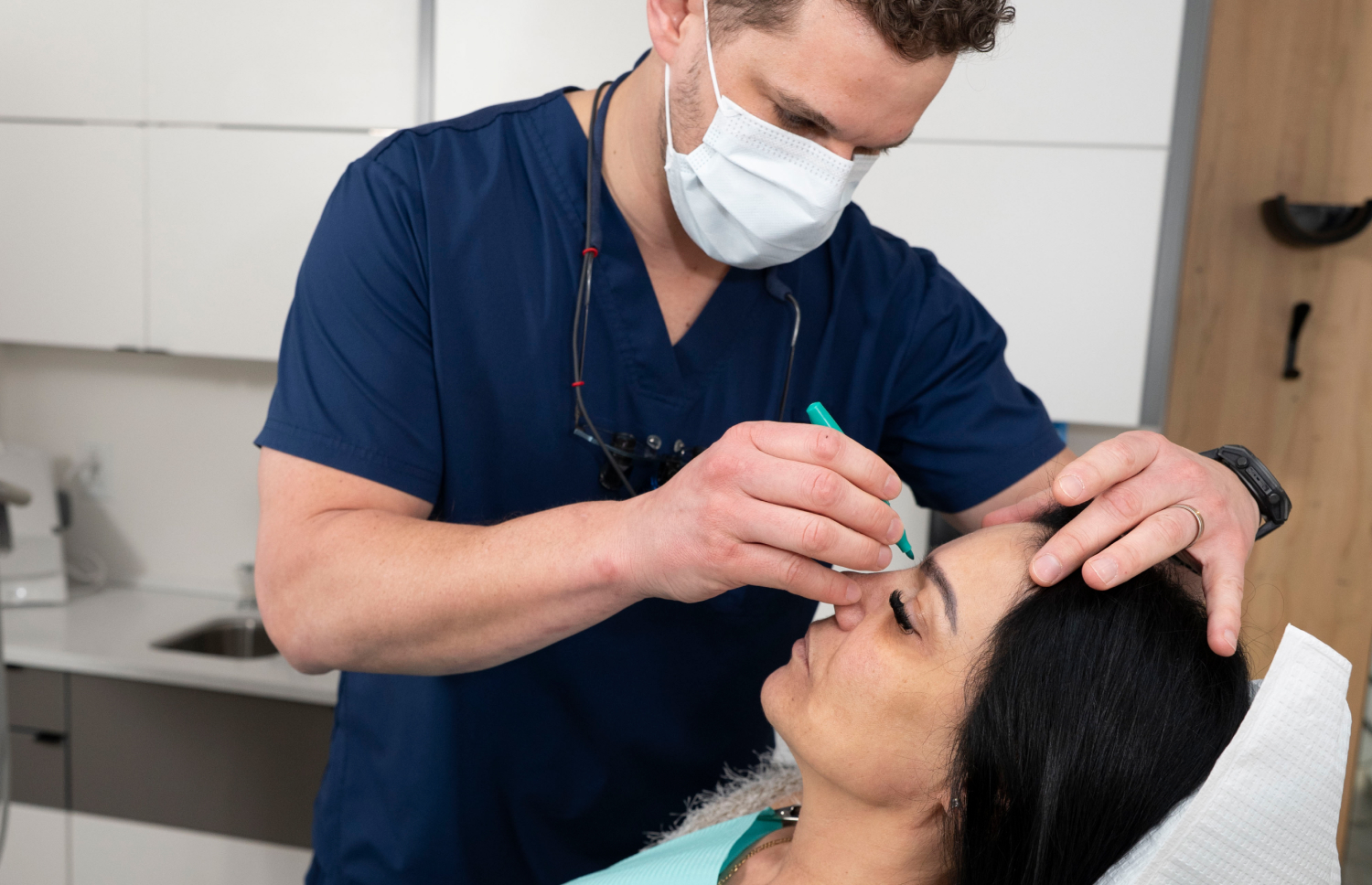
Neuromodulator injections provide an effective therapeutic approach for TMJ disorders and severe bruxism. By targeting specific facial muscles, these injections help relax tense muscles, reduce jaw pain, alleviate chronic headaches, and prevent excessive tooth wear. Injections (Botox®, Dysport®, Xeomin®) are administered directly at the clinic by your dentist, and the effects typically last 3 to 6 months.
Learn more
Neuromodulator injections provide an effective therapeutic approach for TMJ disorders and severe bruxism. By targeting specific facial muscles, these injections help relax tense muscles, reduce jaw pain, alleviate chronic headaches, and prevent excessive tooth wear. Injections (Botox®, Dysport®, Xeomin®) are administered directly at the clinic by your dentist, and the effects typically last 3 to 6 months.
Snoring and sleep apnea
Regain restful sleep
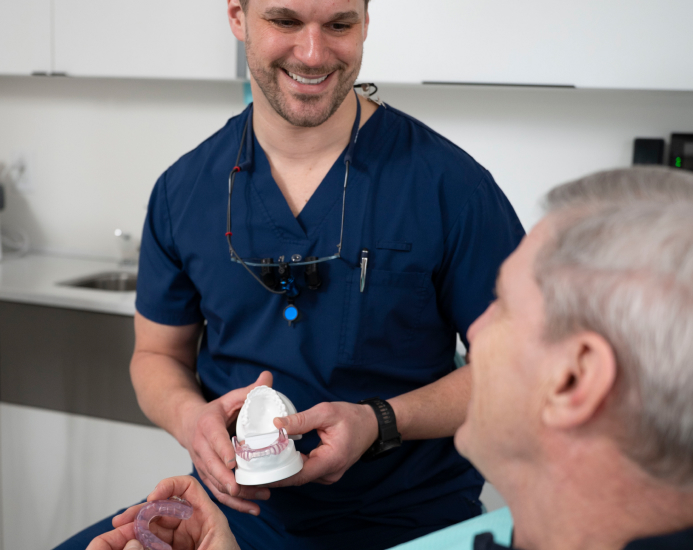
Snoring and sleep apnea can seriously impact your cardiovascular health, energy levels, and overall quality of life. A mandibular advancement device helps keep your lower jaw slightly forward to maintain open airways. Comfortable, discreet, and easy to carry, it is an excellent alternative to CPAP for mild to moderate cases of sleep apnea.
Our dentists can custom-make your mandibular advancement device when prescribed by a medical specialist. If you snore loudly, wake up feeling tired, experience daytime sleepiness, or have been diagnosed with sleep apnea, talk to our team.
Snoring and sleep apnea can seriously impact your cardiovascular health, energy levels, and overall quality of life. A mandibular advancement device helps keep your lower jaw slightly forward to maintain open airways. Comfortable, discreet, and easy to carry, it is an excellent alternative to CPAP for mild to moderate cases of sleep apnea.
Our dentists can custom-make your mandibular advancement device when prescribed by a medical specialist. If you snore loudly, wake up feeling tired, experience daytime sleepiness, or have been diagnosed with sleep apnea, talk to our team.
Occlusal adjustment
A small adjustment can make a big difference
Malocclusion is a misalignment between your upper and lower teeth when your mouth is closed. It can cause a variety of problems, including premature tooth wear, jaw pain, headaches, and TMJ disorders.
Occlusal adjustment involves slightly modifying the surface of certain teeth (by reshaping or adding material) to restore a balanced, harmonious bite. This precise procedure helps redistribute chewing forces evenly and reduces muscle tension.
Malocclusion is a misalignment between your upper and lower teeth when your mouth is closed. It can cause a variety of problems, including premature tooth wear, jaw pain, headaches, and TMJ disorders.
Occlusal adjustment involves slightly modifying the surface of certain teeth (by reshaping or adding material) to restore a balanced, harmonious bite. This precise procedure helps redistribute chewing forces evenly and reduces muscle tension.
Book an appointment
Relieve your pain and improve your sleep
Do you suffer from jaw pain, chronic headaches, teeth grinding, or sleep disturbances? Our team is here to listen, assess your situation, and provide effective, personalized solutions. Don’t let these discomforts affect your quality of life, contact us today.