Gum grafting
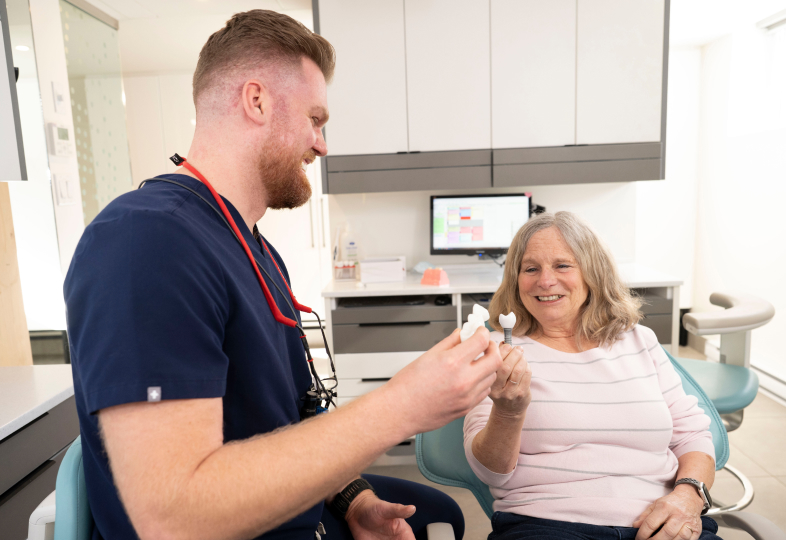
Gum grafting is a surgical procedure performed under local anesthesia. It is used to increase gum thickness or correct gum recession by adding a piece of healthy gum tissue taken from the palate. Gum grafts can help protect your teeth, reduce sensitivity, and restore the aesthetics of your smile.

What is a gum graft?
Treat gum recession to protect your teeth
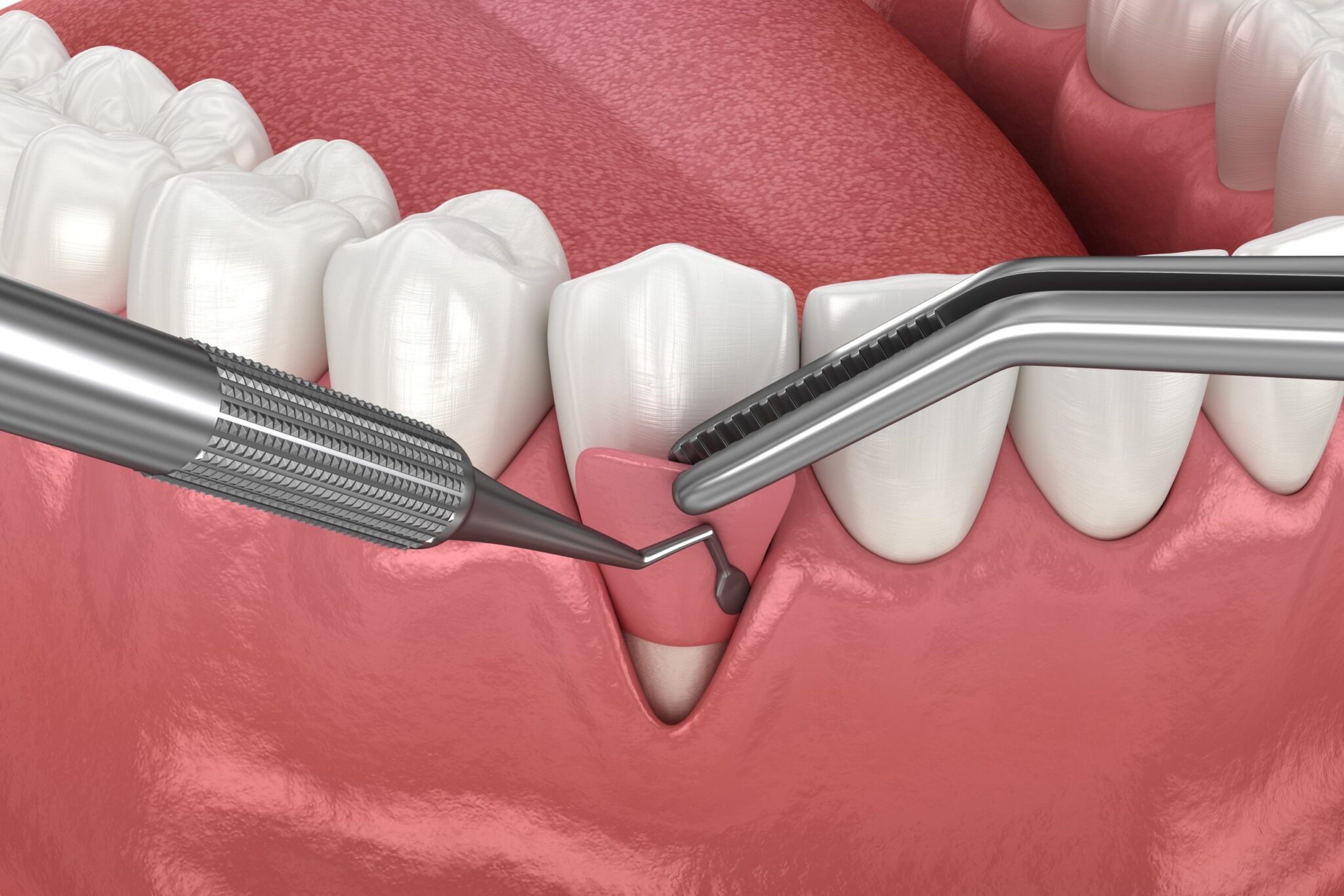
A gum graft is a restorative surgery designed to fill areas where gum tissue is missing by adding healthy gum tissue. A graft is taken from your own palate and placed on the area being treated to rebuild the missing gum. This procedure protects exposed roots, stops the progression of gum recession, and strengthens the tooth’s support in the jaw.
Why choose our clinic?
Your smile and comfort are our priority
Gum grafting is a delicate procedure that requires precision, experience, and careful follow-up. Our dentists perform the surgery directly in the clinic while our team ensures your comfort throughout the process.
-
Comprehensive periodontal evaluation
-
Microsurgical precision
-
Pain management
-
Aesthetic and functional results
-
Expert care
-
Close monitoring of the healing process

Aftercare instructions
For optimal healing of your gum graft
The first 24 to 48 hours
A slight bleeding or oozing from the donor site is normal during the first 24 hours. If bleeding occurs, place a damp gauze pad on the donor site and apply gentle pressure for 20 minutes.
- Apply ice to the cheek for 10 to 15 minutes each hour to reduce swelling.
- Take prescribed medications and pain relievers as directed.
- Avoid touching the grafted area with your tongue or fingers.
- Do not spit or rinse vigorously.
- Rest and limit physical activity.
- Avoid bending over or lifting heavy objects.
- Do not smoke.
Eating guidelines during recovery
First week
- Stick to soft, lukewarm, or cold foods that don’t require vigorous chewing.
- Avoid small, grainy foods that could get under the graft and interfere with healing (rice, quinoa, sesame seeds, poppy seeds, etc.).
- Avoid hot, spicy, acidic, hard, crunchy, or sticky foods that could irritate or dislodge the graft.
- Chew on the side opposite the graft whenever possible.
- Drink plenty of water, but avoid using a straw.
Second week
- Gradually introduce firmer foods as tolerated, but continue to avoid chewing directly on the grafted area.
Oral hygiene
Oral hygiene instructions after gum grafting
- Do not brush or floss directly on the grafted or donor site for the first two weeks.
- Rinse very gently with a prescribed antiseptic mouthwash (such as chlorhexidine) after meals, letting the liquid flow over the area without vigorous spitting.
- Continue brushing and flossing your other teeth as usual to maintain overall oral hygiene, but be extremely gentle near the grafted and donor areas.
Follow-up and warning signs
Follow-up appointments
It is essential to attend all follow-up visits so we can monitor the graft’s integration and remove stitches at the appropriate time.
Normal healing
- The graft may initially appear white or slightly gray, gradually turning pink as it integrates.
- Mild swelling, sensitivity, and discomfort are normal during the first few days. The donor site on the palate may feel more uncomfortable than the grafted area during the first week.
- The graft gradually integrates over 6 to 8 weeks, with complete healing taking up to 3 to 4 months.
Contact us immediately if you experience:
- Heavy bleeding that does not stop with gentle pressure
- Severe pain (even with prescribed pain medication)
- Fever above 38.5°C (101°F)
- Swelling that worsens after 3 days
- Graft appearing to detach or change color
- Signs of infection (pus, foul odor, excessive warmth)
Frequently asked questions
Frequently asked questions about gum grafts
Are the results permanent?
Yes! The benefits of the graft can last a lifetime.
However, it is essential to eliminate risk factors to prevent further gum recession and to maintain excellent oral hygiene to prevent gum disease.
Are gum grafts painful?
The procedure itself is not painful thanks to local anesthesia, which completely numbs the area. During the surgery, you will not feel any pain, only perhaps some slight pressure.
After the procedure, some discomfort is normal and varies from person to person. Prescribed pain medications manage the pain effectively.
Discomfort usually decreases after 3 to 5 days, and most patients can resume normal activities within just 48 to 72 hours.
What is the difference between an autogenous graft and AlloDerm?
An autogenous graft (also called a connective tissue graft) involves taking the graft from your own palate and transplanting it to the recipient site (the area of recession).
This technique has a very high success rate, usually over 96%, and allows excellent integration since it uses your own tissue. The main drawback is that it creates two surgical sites: the recipient site and the donor site on the palate.
The AlloDerm technique, on the other hand, uses a gingival tissue membrane from a human donor. AlloDerm is sterile, biocompatible, and integrates naturally with your tissues.
This technique avoids taking tissue from your own palate, which reduces post-operative discomfort. However, healing at the recipient site is slower, integration can be more challenging, and the cost may be slightly higher.
Book an appointment
Your gum health comes first
Do you suffer from tooth sensitivity, have exposed roots, or notice gum recession? A gum graft can restore the health and aesthetics of your smile. Consult our dentists for a comprehensive periodontal examination.