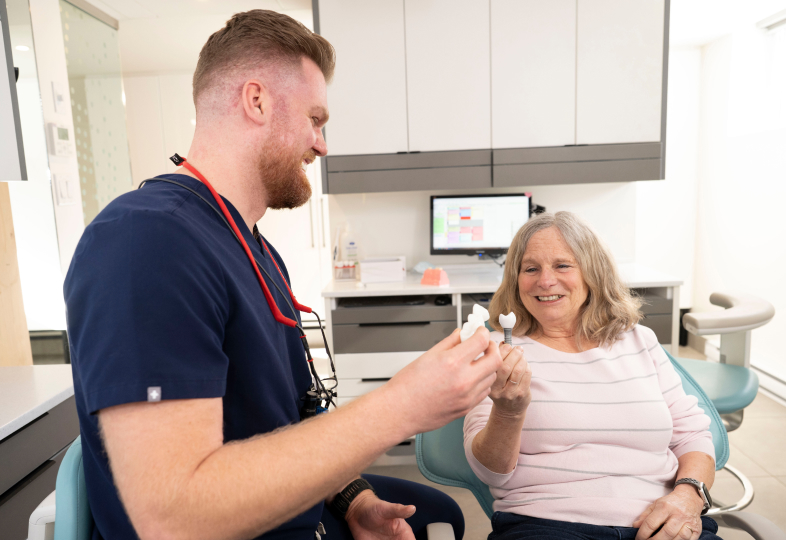
Professional dental cleaning
Regular dental cleanings are key to lasting oral health and a bright smile. Our qualified hygienists remove plaque and tartar that accumulate in hard-to-reach areas, help prevent cavities and gum disease, and provide guidance on the best hygiene practices tailored to your needs.
What is a professional cleaning
An essential preventive care for the whole family
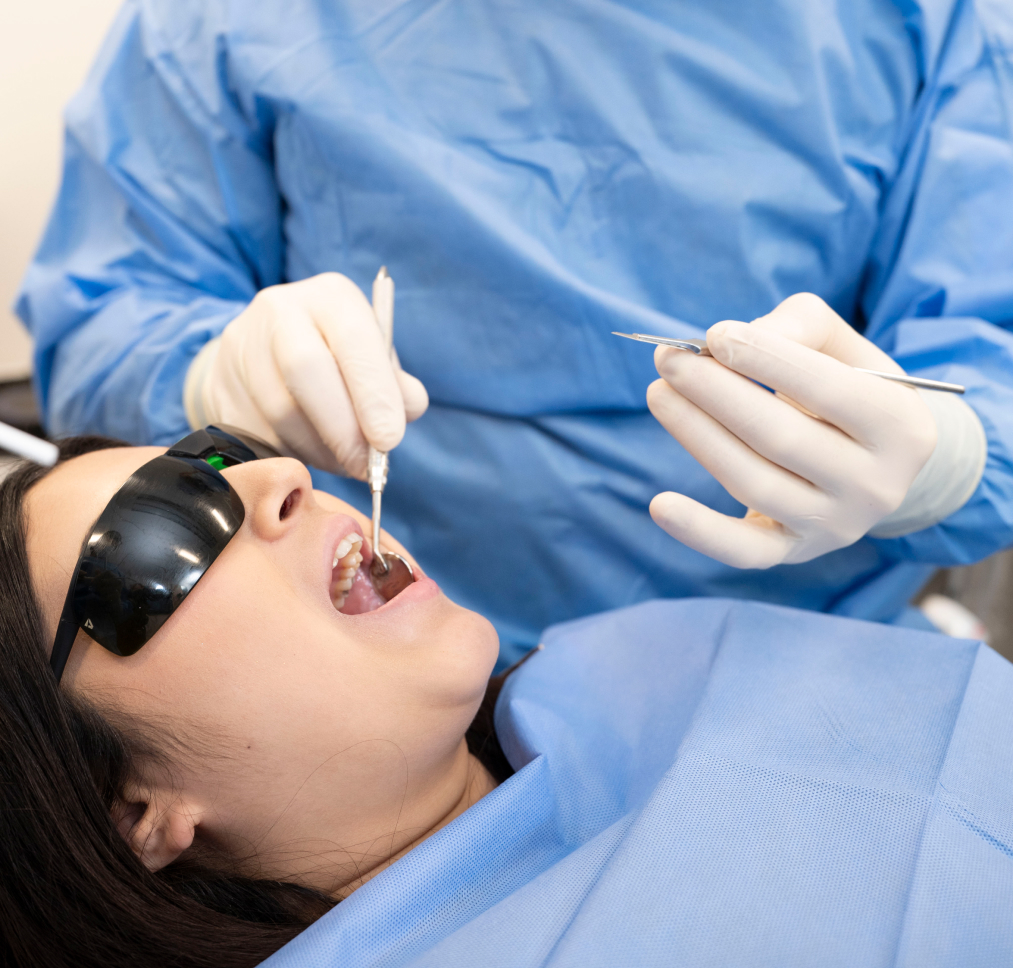
Professional dental cleaning, including scaling and prophylaxis, is an essential preventive care that maintains your oral health and helps prevent future problems. Unlike brushing and flossing at home, which clean the visible surfaces of the teeth, professional cleaning removes hardened plaque (tartar) and reaches the hard-to-access areas where bacteria accumulate.
Why choose our clinic?
Our hygienists take care of you
Members of the Ordre des hygiénistes dentaires du Québec, our dental hygienist teams receive continuous training to provide the best care and advice tailored to each patient’s needs. Because every mouth is unique, we determine the frequency of your cleanings based on your oral health: risk of cavities, tartar buildup, gum health, hygiene habits, and risk factors (tobacco use, diabetes, pregnancy, medications, etc.).
-
Individual assessment and personalized advice
-
Gentle and caring approach
-
Continuously trained hygienists
-
Modern technologies for your comfort
-
Ultrasonic scaling and panoramic X-rays
-
Early detection of dental problems
The steps of a complete dental cleaning
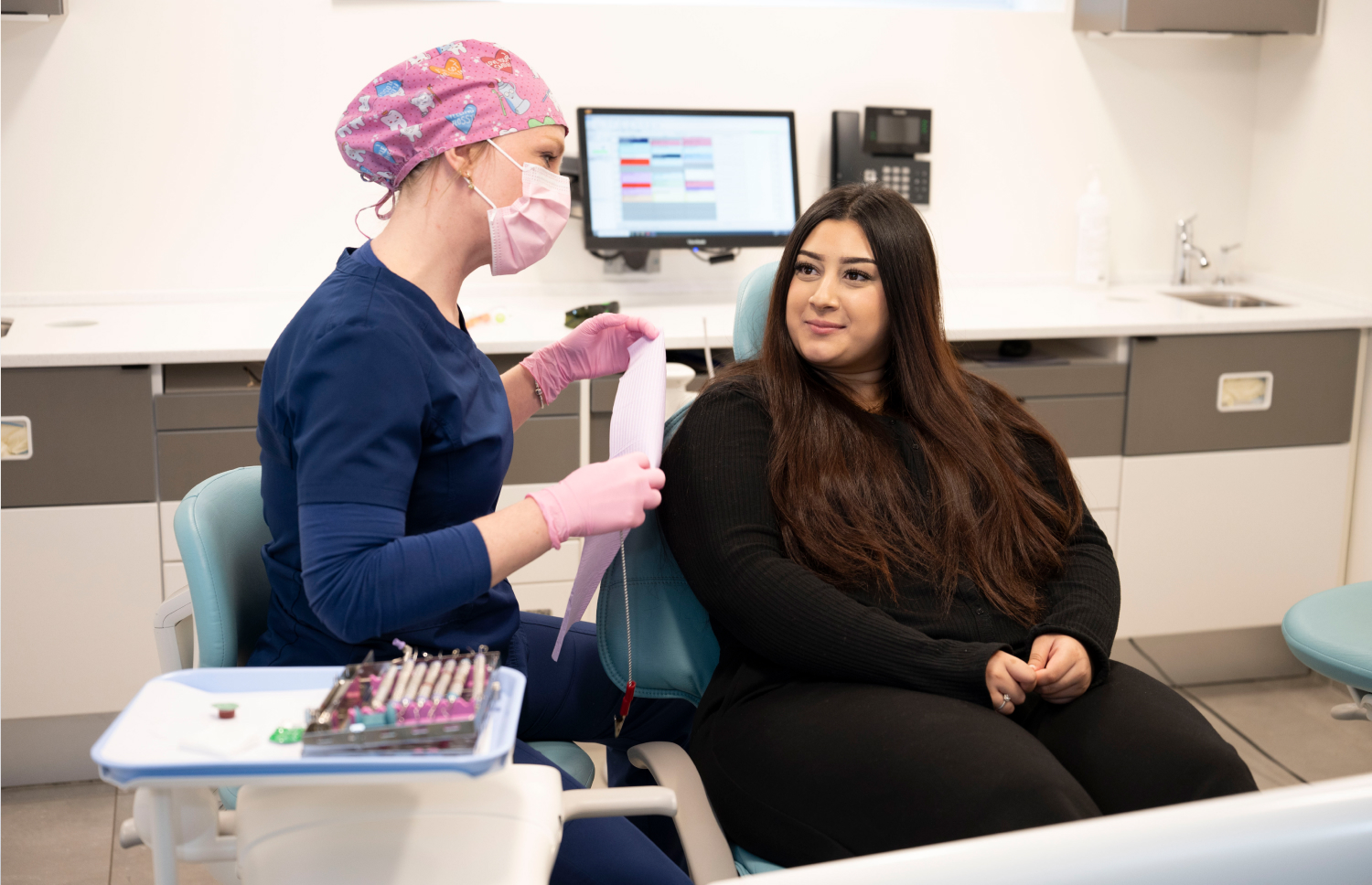
1. Initial screening
Our hygienists examine your teeth, gums, and mouth to detect any signs of cavities, inflammation, or abnormalities.
2. Scaling
We gently remove plaque and tartar that have accumulated on your teeth and below the gum line. We use an ultrasonic device and a water spray to effectively break up large tartar deposits, along with manual instruments for precise work in delicate areas.
3. Polishing (Prophylaxis)
We apply a polishing paste to your teeth, removing surface stains caused by coffee, tea, wine, or tobacco. Your teeth regain a smooth surface, making it harder for plaque to accumulate in the future.
4. Fluoride application (if needed)
Fluoride strengthens tooth enamel and provides extra protection against cavities. We use it especially for children, teenagers, and adults at high risk for cavities.
5. X-Rays (According to protocol)
As prescribed by the dentist, X-rays are taken to detect interproximal cavities that are invisible to the naked eye, monitor the condition of your bones, and identify any potential abnormalities.
6. Personalized advice
Our hygienists always take the time to provide hygiene advice personalized to your needs: brushing technique, choice of toothpaste and toothbrush, flossing, recommended mouthwash, and other products or techniques based on your needs. Don’t hesitate to ask them for assistance.
Frequently asked questions
Frequently asked questions about dental cleaning
How often should I have a dental cleaning?
The frequency of your cleanings is unique to each patient and depends on your oral health. Based on the dentist’s diagnosis, your hygienist will provide a personalized hygiene protocol, taking into account factors such as:
- The presence of periodontal diseases (periodontitis)
- Your rate of tartar buildup
- Your history of cavities (frequency)
- Whether you have dental implants or crowns that require careful monitoring
- Whether you wear orthodontic appliances
- Other conditions affecting gum health (e.g., diabetes).
Is dental cleaning painful?
Our team takes a gentle approach to avoid any pain during your cleaning. You may feel slight pressure or vibrations during scaling, especially with the ultrasonic device, but it remains comfortable.
However, if you have inflamed gums (gingivitis), you may experience some sensitivity or mild discomfort when the hygienist cleans below the gum line. If you are particularly sensitive, we can apply a topical anesthetic gel to make the cleaning more comfortable. Don’t hesitate to share your concerns, as your comfort is our priority.
After the cleaning, your gums may be slightly sensitive for a few hours. This sensitivity is generally well tolerated and disappears quickly. Additionally, your teeth may be sensitive to cold, so we recommend using toothpaste for sensitive teeth.
Can I eat or drink after a dental cleaning?
Yes, you can eat and drink immediately after a dental cleaning (unless otherwise instructed).
If fluoride was applied (common for children and some adults), it is recommended to wait 30 minutes before eating or drinking.
If you had a deep cleaning under local anesthesia, wait until the numbness completely wears off (2 to 4 hours) before eating to avoid accidentally biting your cheek or tongue.
Book an appointment
It all starts with a professional cleaning
When was your last dental cleaning? Do your gums bleed when you brush your teeth? It’s time to take care of your smile! At Centre dentaire Ahuntsic, we help you preserve your natural teeth for life through preventive care. Schedule an appointment with our team today.